



Mazu Temple: A New Cultural and Tourism Landmark at the Mouth of the Sarawak River
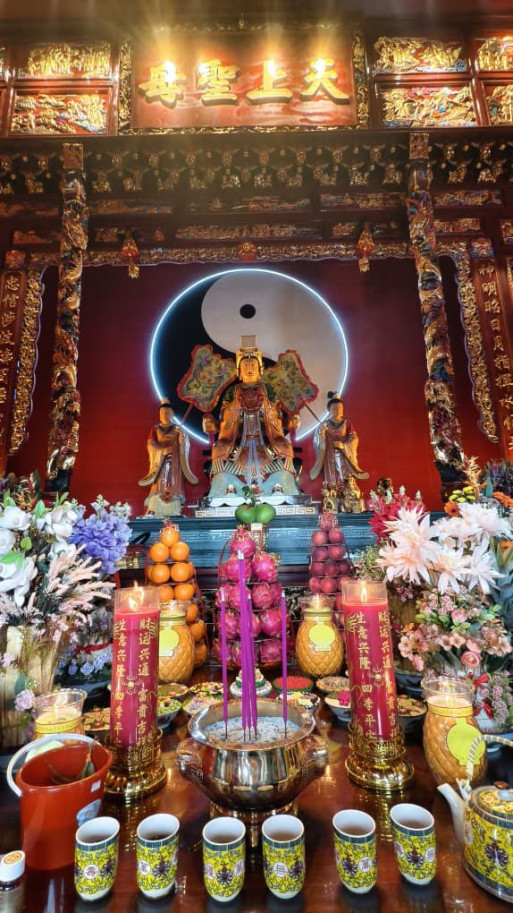
Mazu Temple: A New Cultural and Tourism Landmark at the Mouth of the Sarawak River
The newly completed Mazu Temple, located within the historic Qing Shan Yan Temple in Kampung Muara Tebas, stands today as a powerful symbol of religious harmony, peaceful coexistence, and unity in diversity in Sarawak.Deputy Premier Datuk Amar Dr Sim Kui Hian said it was a great honour for him to officiate the Mazu Statue Consecration Ceremony, marking the completion of the temple after six years of construction since its groundbreaking in 2019.
The project received RM4 million in funding from the Sarawak Unit for Other Religions (UNIFOR), with the total construction cost nearing RM9 million.
“It gives me great honour to witness and take part in this meaningful and sacred occasion,” Dr Sim said in a pre-recorded interview.
Mazu, revered worldwide as the Goddess of the Sea, is worshipped by over 300 million devotees globally, particularly among seafarers, fishermen, and coastal communities. Dr Sim noted that faith in Mazu transcends national and cultural boundaries, uniting people through values of compassion, protection, and hope — values that closely reflect Sarawak’s own spirit of harmony.
✨ A New Tourism Landmark
Beyond its spiritual significance, the Mazu Temple is expected to become a new tourism attraction, boosting Muara Tebas’ appeal, stimulating the local economy, and creating new business and employment opportunities.
The Qing Shan Yan Temple, with a history spanning nearly 200 years, carries deep cultural roots. The deities worshipped here were brought by early settlers who journeyed south to Sarawak, carrying with them perseverance, respect for nature, and a strong sense of community — values that continue to shape Sarawak’s multicultural identity today.
🤝 Side by Side for Over Two Centuries
What makes Kampung Muara Tebas truly unique is the peaceful coexistence of a Malay village and a Chinese temple for more than 200 years, a living testament to Sarawakians’ mutual respect, tolerance, and understanding in everyday life.
Dr Sim, who is also the Minister of Public Health, Housing and Local Government, highlighted the active participation of Muslim residents in supporting temple activities — a reflection of Sarawak’s strong spirit of inclusiveness and shared responsibility.
Situated on 9.1 acres of land under DBKU’s jurisdiction, the Mazu Temple is the second temple in Kampung Muara Tebas and has already become a centre of faith and a recognised symbol of religious harmony.
“Kampung Muara Tebas is a proud example of Malaysia’s cultural integration and Sarawak’s unity in diversity.
The establishment of the Mazu Temple within a Malay village shows how Sarawak continues to progress through cooperation, respect, and shared responsibility,” Dr Sim said.
Among the distinguished guests present were Kuching Hokkien Association chairman Dato Sri Richard Wee and Kuching South City Council (MBKS) Mayor Dato Wee Hong Seng.
🌏 Sarawak — where diversity is lived, not just celebrated.

Related Posts

Latest Posts



Comments (0)
Be the first to write a comment for this article.Write a comment